

Insurance Coverage Information
At Kinesis Studio, we understand the emotional and financial journey following breast reconstruction. Areola restoration (also known as paramedical dermopigmentation or 3D nipple tattooing) is often covered by health insurance as part of post-mastectomy care, thanks to the federal Women’s Health and Cancer Rights Act (WHCRA) of 1998. This law mandates coverage for all stages of breast reconstruction in most group plans, HMOs, Medicare and certain Medicaid programs like Connecticut’s HUSKY Health—provided it’s deemed medically necessary.
Your Legal Rights Under WHCRA
The WHCRA (Women’s Health and Cancer Rights Act) applies nationwide, including Connecticut, ensuring insurers cannot deny or limit reconstruction benefits, including areola restoration. Coverage typically includes initial procedures and necessary touch-ups if healing affects results. Medicare often reimburses when performed in a hospital or by approved providers; private plans vary but must comply federally. Always verify your specific policy, as exclusions apply to purely cosmetic work unrelated to mastectomy.
Step-by-Step Guide to Getting Coverage
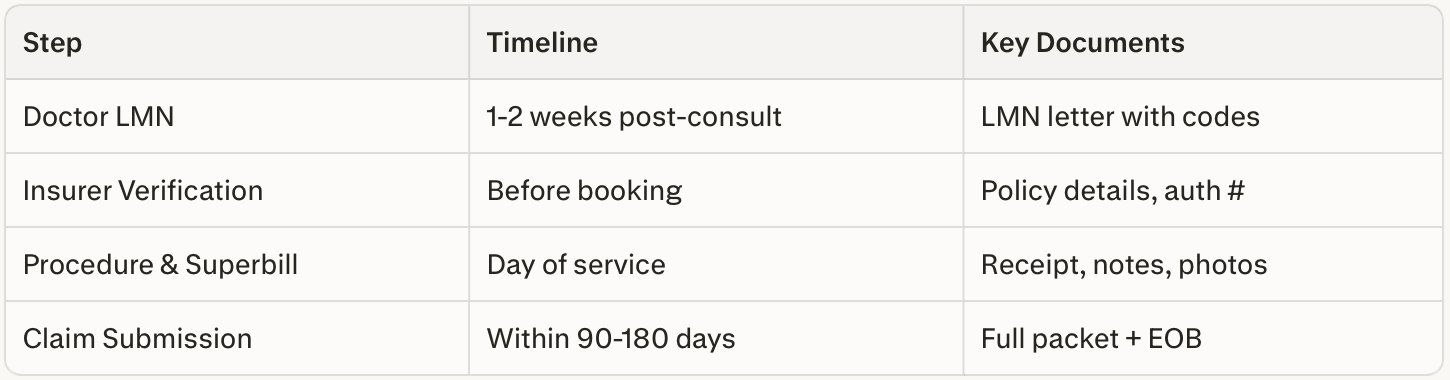
This guide walks you through how most clients at Kinesis Studio handle insurance reimbursement for areola tattooing. You typically pay upfront, then request repayment from your insurance because specialized artists like us are usually treated as out-of-network.
Quick Checklist
Ask your surgeon/oncologist for a Letter of Medical Necessity (LMN)
Call your insurance before your appointment
Book your session and pay upfront at Kinesis Studio
Submit your claim package for reimbursement
If denied, file an appeal
Step 1: Get a Letter of Medical Necessity
Ask your breast surgeon or oncologist for a Letter of Medical Necessity (LMN) for nipple–areola tattooing.
The letter should:
Confirm your history of mastectomy and reconstruction
State that you are cleared for areola tattooing (often at least 12 months post-surgery or when fully healed)
Clearly say this is reconstructive, not cosmetic
Note emotional/psychological benefits (body image, confidence, quality of life)
Helpful (but optional) details your doctor may include:
ICD-10 codes for your diagnosis and post-mastectomy status
CPT codes related to reconstructive work (e.g., codes in ranges your surgeon commonly uses)
Keep a copy for yourself; you’ll submit it with your claim.
Step 2: Call Your Insurance Before Your Appointment
Turn over your insurance card and call Member Services.
You can say:
“Hi, I’m a breast cancer survivor (or previvor). I’ve had a mastectomy with breast reconstruction and I’m completing the final stage, nipple–areola tattooing (medical micropigmentation). My provider, Kinesis Studio, is out-of-network. I will pay upfront and submit for reimbursement. Can you tell me how this is covered under my breast reconstruction benefits?”
Ask:
Is nipple–areola tattooing covered as part of post-mastectomy reconstruction?
What are my out-of-network benefits for this service?
Do I need prior authorization or a referral?
How do I submit a claim (portal, forms, mailing address)?
If they say it’s cosmetic, respond:
“This is part of my breast reconstruction after mastectomy. Under federal law, plans that cover mastectomy must cover all stages of reconstruction, including procedures that restore appearance and symmetry.”
Write down:
Representative’s name
Date and time of the call
Reference number for the call (if given)
Any instructions (authorizations, forms, deadlines)
Bring these notes to your appointment.
Step 3: Book Your Appointment & Pay Upfront
Once you understand your benefits, you’re ready to book your areola tattoo at Kinesis Studio.
At your visit:
You’ll have your consultation and procedure
You’ll pay the studio fee at the time of service (we do not bill insurance directly)
You’ll have before/after photos, which can sometimes support your claim
From Kinesis Studio, you will receive:
A detailed superbill / itemized receipt with:
Procedure description
Diagnosis and procedure codes we use for documentation
Amount paid
A Letter of Medical Necessity template (if your doctor needs guidance)
Brief procedure notes, if helpful
You can submit the claim yourself or use a third-party billing service if you prefer extra help.
Step 4: Submit Your Claim
After your appointment, submit your reimbursement packet to your insurance. Typically, this includes:
Your Letter of Medical Necessity
The itemized receipt / superbill from Kinesis Studio
Any procedure notes we provide
A copy of your insurance card (front and back), if requested
Any claim form required for out-of-network services
Send via:
Your insurer’s online member portal (preferred), or
Mail/fax to the claims address on your insurance card
Typical processing time is 30–90 days. You will then receive an Explanation of Benefits (EOB) showing how the claim was handled and if reimbursement is due.
Step 5: If You’re Denied, Appeal
If your claim is denied, it does not mean the process is over.
Read your EOB and note the reason (cosmetic, out-of-network, missing prior authorization, etc.).
Prepare an appeal package, including:
An appeal letter stating this is reconstructive and part of post-mastectomy care
Your Letter of Medical Necessity
Your superbill/receipt and procedure notes
A copy of your EOB and your call notes
Ask your insurance about:
A formal internal appeal
Escalation to a supervisor or medical review
If needed, how to request an external review
If you believe your reconstruction rights are not being honored, you may also contact your state insurance department for support and to file a complaint.
You Don’t Have to Navigate This Alone
Kinesis Studio will:
Provide the documentation you need
Help you understand which pieces to submit
Encourage you to advocate for the coverage you’re entitled to as part of your reconstruction
You’ve already done so much hard work to get here. This final step is about helping you feel complete in your body—and it deserves to be taken seriously.
What Might Not Be Covered
• Non-mastectomy cases (e.g., congenital or elective).
• Multiple touch-ups beyond medical need.
• Uninsured clients: We offer a compassionate waitlist for free services
—a limited few per year for those in true need. Contact us to apply.
Pre-Procedure Requirements
Ensure optimal results and coverage eligibility:
• Fully healed reconstruction 12 months post-op; surgeon clearance required.
• Avoid sun exposure, blood thinners, alcohol, Retin-A 7-10 days prior.
• No active skin issues; patch test available.
We provide full aftercare and follow-up guidance.
FAQs
How much is reimbursed? Varies—many get 70-100%, but deductibles/copays apply.
Can you bill directly? We’re out-of-network but provide all claim-ready docs.
What if denied? Appeal with WHCRA reference; we’ll support with additional letters.
Timeline for touch-ups? 6-12 weeks; included in original cost.
Ready to start? Schedule a private consultation. We’re here to guide you compassionately through every step, helping you feel confident, whole and beautifully restored.
Ready to start?